
Getting your website to show up on Google is not just a technical task. It is the difference between building something people actually find and publishing into complete silence. Most websites never get real traffic, not because the content is bad, but because nobody taught the person behind them how search actually works.
I learned this the hard way. I spent months writing consistently, doing everything I thought was right, and still barely moved the needle. It was frustrating in a way that is hard to describe. Eventually I stopped guessing and started actually understanding how Google decides what to rank, and everything changed after that.
In this post I am going to walk you through exactly what works in 2026. Keyword research, content strategy, technical fixes, backlinks, all of it. Not vague theory but the actual process that gets pages ranking.
If you have ever felt like Google is just ignoring you, keep reading. This is where that changes.
What Does It Mean to Rank a Website on Google?
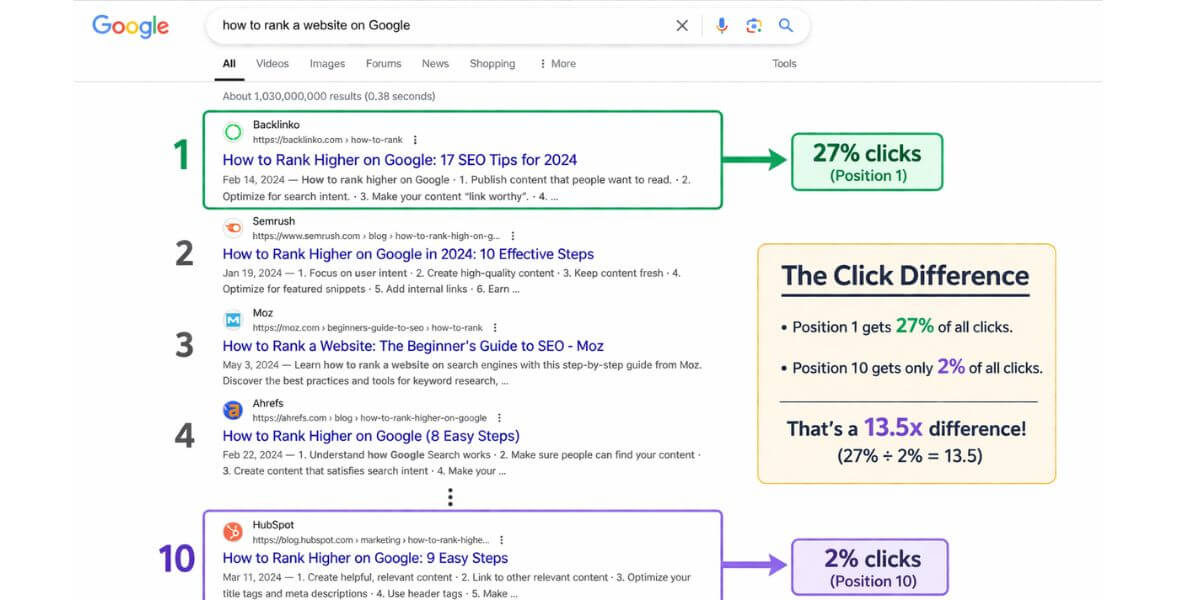
When people talk about trying to rank a website on Google, they mean getting pages to show up high in the search results when someone types something relevant. Simple idea. But position one gets roughly 27% of all clicks. Position ten gets around 2%.
That gap is not about pride. That gap is the difference between a website that actually grows and one that just sits there costing you hosting fees every month. Organic traffic, real search visibility, people finding you without you paying for every click. That is what ranking actually gives you.
How Google Ranks Websites in 2026 (Core Ranking Factors Explained)
My mate who runs an SEO agency told me once: “Google just wants to give people the best answer. So that’s the best answer.”
I wanted a clever trick. A shortcut. There is not one. But understanding what Google actually looks at makes the whole thing feel less like guesswork.
Search Intent and User Satisfaction
Search intent means what the person actually wants when they type something in. If someone searches to rank a website on Google, they want a proper walkthrough, not a sales page or five paragraphs of vague advice.
Google watches behaviour. Did they read your page and feel satisfied? Or did they bounce back to the results in ten seconds? That signal tells Google more about your content than any keyword placement ever could.
Content Quality and Relevance
Google has a system specifically designed to find content that exists purely to rank rather than to genuinely help anyone. It finds it and buries it. If your article reads like it could have been written by anyone about anything, that is exactly how Google will treat it.
Authority, Backlinks and Trust Signals
Other websites linking to yours tells Google that real people in your space consider your content worth referencing. But in 2026, E-E-A-T matters just as much. Experience, Expertise, Authoritativeness, Trustworthiness. It is not just who links to you. It is whether your content shows a real knowledgeable person actually wrote it.
Technical SEO and Page Experience
Brilliant content on a slow broken website will not rank. Technical SEO is the foundation. Skip it and everything else you build sits on sand.
Step-by-Step Process to Rank a Website on Google
Step 1: Find the Right Keywords
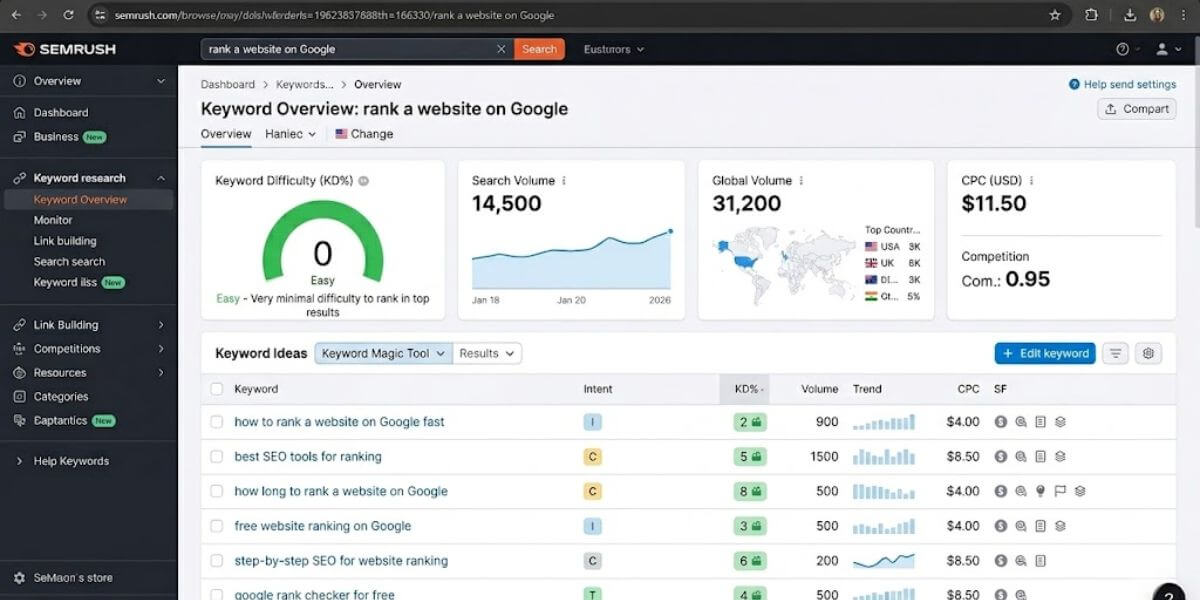
Find what people are actually searching for before writing anything. Tools like Ahrefs and SEMrush show real volumes and competition levels. Start specific. Long-tail keywords like “how to rank a local business on Google Maps” are far more realistic for newer sites than just “SEO.”
Step 2: Match Search Intent Properly
Open the top five results for your keyword and read them. Study the format. Are they guides? Listicles? Product pages? Google is already showing you what it rewards. Work within that format and go deeper than what is already there.
Step 3: Create High-Quality Content
Write like you are explaining something to a friend who genuinely needs help. Clear, honest, thorough enough that they do not need to go anywhere else when they finish. Real examples, actual specifics, honest answers. That is people-first content in practice.
Step 4: Optimize On-Page SEO Elements
Title tag with your keyword, written to earn the click. Meta description that sounds human. H1 used once. Keywords appear naturally through the article without being jammed in awkwardly. Clean URLs with hyphens. None of this is complicated. It is just paying attention.
Step 5: Fix Technical SEO Issues
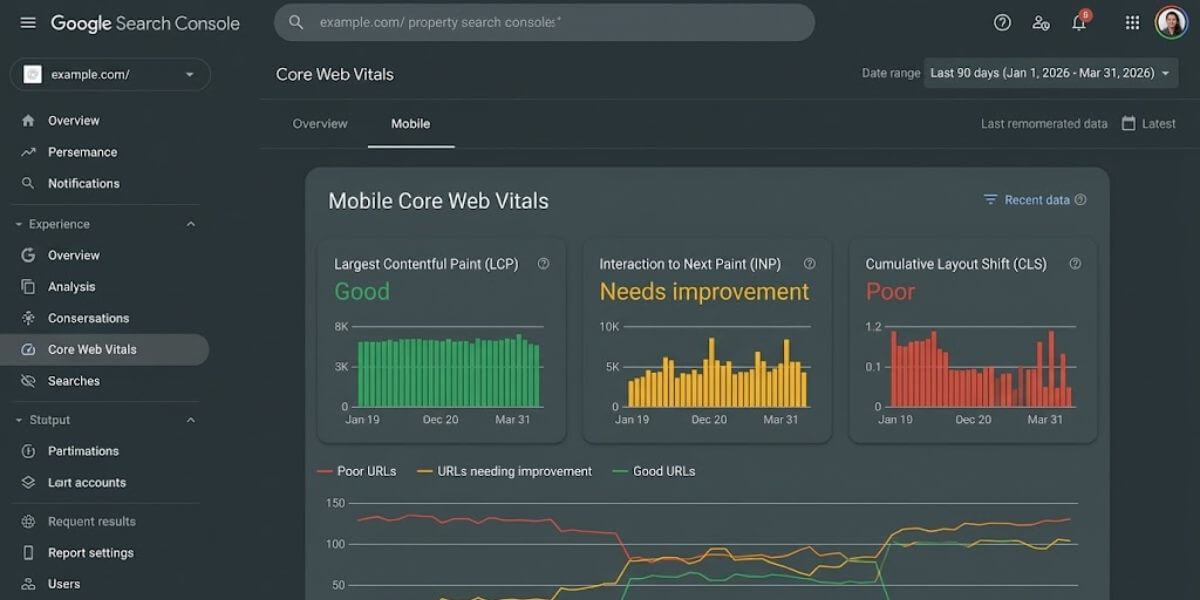
Run a crawl audit. Check Core Web Vitals in Google Search Console. Sort page speed and mobile display. Fix broken links. Boring work but skipping it is like writing something brilliant and handing it in with half the pages missing.
Step 6: Build High-Quality Backlinks
One real link from a trusted website beats a hundred from random places nobody has heard of. Guest posting, creating content worth referencing, digital PR. These build lasting search visibility without risking a penalty that wipes out months of work overnight.
Step 7: Strengthen Internal Linking
Every article should link to two or three relevant pages already on your site. Do it intentionally. It spreads authority across your whole site and helps Google understand how everything connects. This is how you build real SEO authority that compounds over time.
Step 8: Build Topical Authority
One comprehensive pillar page on your main subject surrounded by supporting articles going deep on every subtopic. When Google sees a site genuinely covering a whole subject area, it starts trusting that domain. That trust shows up in rankings across everything you publish.
Keyword Research Strategies to Rank on Google Faster
Short-tail vs Long-tail Keywords
Targeting “SEO” as a new website is like entering a marathon with zero training. Short-tail keywords have massive volume and brutal competition. Long-tail keywords have clearer search intent and realistic competition. Start there, build momentum, then go after bigger terms.
Keyword Clustering and Topical Mapping
Rather than five thin articles on five related topics, build one resource covering all the angles properly. Topical mapping means planning content so each piece supports the others and together they signal to Google that your site genuinely owns this subject.
Competitor Keyword Analysis
Find websites ranking just above you. Export their top pages. Look for keywords they rank for that you have not covered. Those gaps are your fastest opportunities because someone already proved Google rewards content on those exact topics.
On-Page SEO Techniques to Rank a Website on Google
Title Tags and Meta Descriptions
Your title needs your keyword and needs to earn the click. Your meta description should sound like a person wrote it. These directly affect your click-through rate from search results which feeds back into your rankings.
Header Structure H1 to H6
H1 once at the top. H2 for main sections. H3 for subsections. Clean structure helps both readers and Google understand what your content covers.
Content Optimization and Keyword Placement
Get your main keyword into the first hundred words naturally. Use semantic keywords and related terms throughout. This is not about density. It is about covering the topic thoroughly enough that all the relevant language appears naturally.
Image SEO and Alt Text
Every image needs alt text describing what is actually in it. Compress images so they do not slow your page. Name files descriptively before uploading.
Technical SEO Checklist for Better Google Rankings
Website Speed and Core Web Vitals
Largest Contentful Paint, Interaction to Next Paint, Cumulative Layout Shift. These three metrics Google measures directly. Fail them and you are competing at a real disadvantage regardless of content quality.
Mobile-Friendliness
Most searches happen on phones. Broken mobile experience means losing rankings and readers simultaneously without even realising it.
Crawlability and Indexing
Submit your sitemap through Google Search Console. Sometimes a page is not ranking simply because Google cannot index it properly. Fixing that one issue can unlock a ranking overnight.
Structured Data and Schema Markup
Schema markup unlocks rich snippets in search results. FAQ schema, how-to schema, article schema. These improve visibility and click-through rates from the same position without needing to rank any higher.
Content Strategy That Helps You Rank Higher on Google
Creating Helpful People-First Content
Before publishing anything, ask one honest question. Does this genuinely help someone? Please do not include the keyword enough. Does it solve a real problem for a real person?
Content Depth vs Content Length
A focused eight-hundred-word article that completely answers a question beats a bloated three-thousand-word piece full of filler every single time. Depth means covering what matters. Length means nothing on its own.
Using Visuals, Examples and Case Studies
One site I worked on went from three hundred monthly visitors to nine thousand in seven months. The change was switching from vague advice to specific examples and real numbers. Specificity builds trust in a way that general statements never can.
Updating and Refreshing Content
Refreshing an old article with new information and stronger internal links can push it from position eighteen to position five within weeks. Most people publish and forget. The ones who keep improving keep winning.
How to Build Authority and Backlinks for Higher Rankings
White-Hat Link Building Techniques
The best link you will ever get is one you did not ask for because you made something genuinely worth referencing. That is the long game and it pays off without ever risking a penalty.
Guest Posting and Outreach
Write something genuinely valuable for a relevant website in your niche. A proper contribution, not a thin piece with a link shoved into paragraph three. The relationship you build often leads to more opportunities down the line.
Brand Mentions and Digital PR
Original research and a genuinely fresh angle earn coverage from publications with serious domain authority. One piece in the right place does more for your rankings than months of average guest posts.
Internal Linking Strategy
Every time you publish something new, go back to older relevant articles and link to the new piece from them. If you want to get your pages appearing on Google faster this is one of the quickest levers available especially on a newer site.
Common Mistakes That Stop You from Ranking on Google
Ignoring Search Intent
Writing what you think Google wants instead of what the searcher actually needs. I did this for months. Technically correct articles that completely missed the point of why someone was searching in the first place.
Keyword Stuffing
Still happening in 2026. Still does not work. Repeating your keyword every fifty words signals low quality to an algorithm specifically trained to spot exactly this.
Weak Content Quality
Thin articles, recycled information, generic advice adding nothing new. Google’s helpful content system exists to find this and suppress it. There are no shortcuts past genuine usefulness.
Poor Technical SEO
Slow loading, broken pages, mobile problems, crawl errors. All of this quietly undermines everything regardless of how strong your content actually is.
How Long Does It Take to Rank a Website on Google?
Honest answer. Competitive keywords on a new website, six to twelve months before meaningful organic traffic arrives. Long-tail keywords with lower competition, sometimes four to eight weeks.
Paid traffic stops when you stop paying. Organic traffic compounds. An article you write today can bring visitors for three years. The math works in your favour eventually. Just not immediately and not without the work.
Advanced SEO Tips to Rank a Website on Google Faster in 2026
Focus on Topical Authority
Own a subject area completely. Build content clusters. Go deep on every subtopic. When Google sees your site genuinely covering a whole field, trust in your domain grows across everything you have published.
Optimize for SERP Features
Answer specific questions clearly within your content. Use FAQ schema. These features increase search visibility even when your actual position stays exactly the same.
Use AI Tools the Right Way
AI helps with research and outlining. But the content that ranks reads like a real person wrote it because a real person with actual knowledge did write it. Use AI to save time. Not as a replacement for genuine expertise.
Improve User Experience Signals
How long people stay, how far they scroll, whether they come back. These signals feed directly into how Google evaluates your content. A page that bores people into leaving after twenty seconds will not hold its rankings.
The websites winning on Google in 2026 are not the most technically sophisticated ones. They are the ones where someone sat down and genuinely tried to be useful. Wrote something real. Kept showing up even when months three and four felt pointless.
Be useful. Be consistent. And do not quit right before it starts working.
FAQs:
Ranking on Google isn’t some big secret. But it does trip a lot of people up including me when I first started. Here are five questions I hear all the time.
How long does it take to rank on Google?
A lot of people run into this frustration early on. You publish, you wait, nothing moves. Truth is, competitive keywords can take six to twelve months on a new site. Long-tail keywords with less competition? Sometimes you’ll see movement in four to eight weeks. It’s slow. But it does work if you stick with it.
Does content length actually matter?
Short answer; not really. I have seen 800-word articles outrank massive 3,000-word ones because they actually answered the question properly. Don’t pad your content just to hit some number. Say what needs to be said and stop there.
Do backlinks still matter?
Yes, they do. But honestly, one solid link from a site people actually trust is worth more than fifty random ones. Stop chasing numbers and start focusing on getting links that make sense for your niche.
What’s the biggest mistake people make with SEO?
Writing for keywords instead of people. You can stuff your keyword into every heading and still not rank because the content doesn’t match what someone actually wanted when they searched. Open the top results before you write anything. Google’s already showing you what works.
Can a new website compete with big established ones?
It can just not right away on the big terms. Start small, own a specific topic area, build from there. Trying to out-rank a ten-year-old authority site on day one is just setting yourself up for disappointment.