

Graph databases are changing how we understand and use information by focusing on connected data. It makes graph analytics fast and efficient, revealing hidden patterns in nodes and edges that traditional databases often miss.
Businesses use it for recommendation engines and fraud detection database systems, turning complex data relationships into clear insights that improve decisions and drive growth.
What Is a Graph Database?
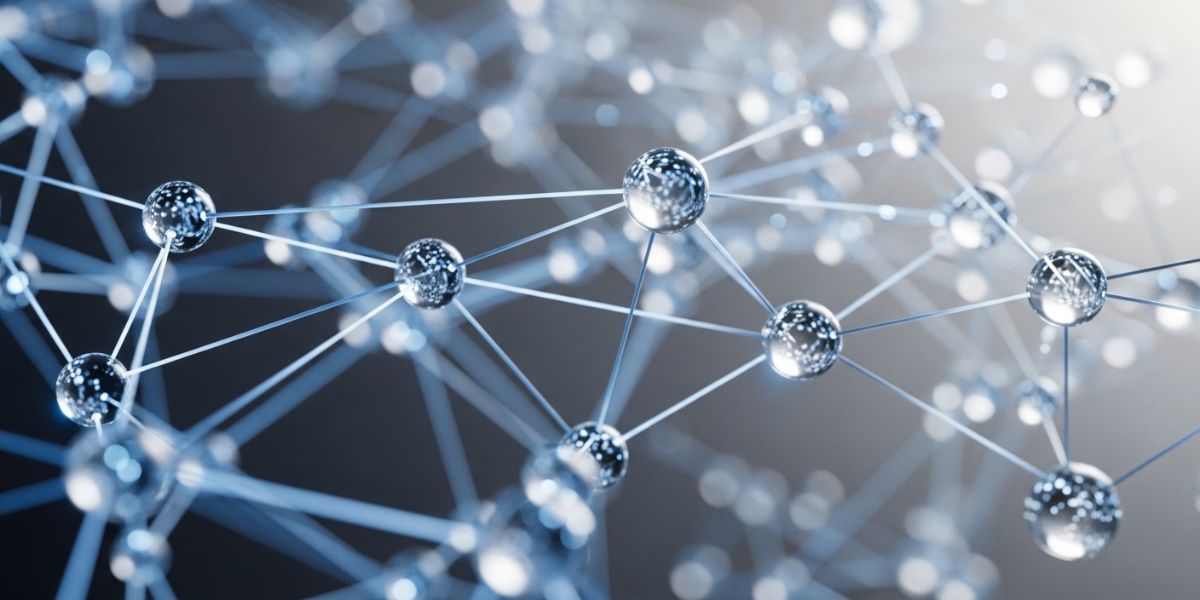
A graph database organizes information as a set of nodes and edges. Nodes represent entities like people or products, while edges show relationships. Each node and edge can store properties, which allows a property graph structure to capture detailed information about every connection. The beauty of this approach is that it mirrors real-world data relationships, making it easier to model complex networks like social network databases or supply chains.
Organizations often use graph databases for recommendation engine applications, such as suggesting products or content based on user behavior. They are also ideal for fraud detection database use cases because patterns and unusual connections can be detected quickly. The direct connection between data points allows real-time queries, enabling fast, actionable insights.
How Graph Databases Work
How graph databases work revolves around the way data is stored and accessed. Data is stored as nodes (entities) connected by edges (relationships). Queries travel along these edges instead of scanning tables, allowing systems to answer complex questions in seconds. For example, tracing a fraudulent transaction across multiple accounts is simpler than in a traditional system.
The graph database architecture supports dynamic and flexible data. Relationships can be added or removed without restructuring the whole database. Graph analytics tools take advantage of this design to produce network analysis insights and detect patterns invisible in other databases. AI with graph databases can predict behaviors, spot anomalies, and optimize processes efficiently.
Types of Graph Databases
There are mainly two types of graph databases. The first is Property Graph, which stores nodes and edges with key-value properties. This type is useful for real-time queries and recommendation engine systems. Examples include Neo4j and TigerGraph. The second is RDF (Resource Description Framework) graph databases. These store data in triples: subject, predicate, and object. They are commonly used in semantic web projects and knowledge graphs.
| Type | Example | Use Case |
| Property Graph | Neo4j | Social networks, recommendation engines |
| RDF Graph | Apache Jena | Knowledge graphs, linked data |
When to Use a Graph Database
Knowing when to use a graph database is key. It works best when data relationships are complex, and connections are more valuable than individual records. Social media platforms, supply chains, and fraud detection systems benefit greatly from this model. Companies needing real-time queries to analyze networks can gain a competitive edge.
Factors to consider include data size, relationship density, and the type of analytics required. If your project requires constant updates and querying of relationships, a graph database will outperform relational systems. Understanding when to use a graph database ensures you apply it where it offers the advantages of graph databases fully.
Advantages of Graph Databases
The advantages of graph databases include speed, flexibility, and relationship awareness. Because queries follow edges directly, large networks can be explored quickly. Companies get faster insights for fraud detection database use cases, recommendation engines, and social network analytics. Graph database benefits extend to easier modeling of real-world systems and fewer data joins.
Additionally, graph database performance shines in AI with graph databases, where predictive analytics depends on network analysis insights. Businesses can optimize master data management, gain better visibility into operations, and improve decision-making. The flexibility of property graph structures allows effortless schema evolution without downtime.
Disadvantages of Graph Databases
Despite their strengths, graph databases have some limitations. Scaling to extremely large datasets can be expensive. Learning to model data in nodes and edges requires expertise, and some tools are still evolving in enterprise support. Writing complex queries may also be challenging for teams accustomed to SQL.
However, proper training and careful database design can overcome these challenges. For projects heavily relying on querying relationships, the benefits usually outweigh the costs. A combination of graph analytics and graph database architecture ensures efficiency and reliability when implemented correctly.
Graph Database Use Cases
Graph databases excel in practical applications. Social network database platforms like LinkedIn or Facebook use them to analyze friendships, followers, and content recommendations. Retailers deploy them for recommendation engine features, suggesting products based on purchasing behavior. Banks and financial institutions apply fraud detection database methods to detect suspicious transactions. Logistics companies map routes and optimize supply chains.
One case study involves a US e-commerce company that integrated a graph database to improve recommendations. Using real-time queries, the system analyzed thousands of transactions per minute. Conversion rates improved by 18%, and customer retention increased due to personalized suggestions.
How to Get Started with Graph Databases
Getting started requires choosing a platform and learning graph database architecture. Beginners often start with Neo4j, which provides tutorials, sample datasets, and a community forum. Another approach is using cloud services like Amazon Neptune for scalable graph solutions.
Once set up, explore graph analytics to visualize relationships and uncover patterns. Practice querying relationships to understand how nodes interact. You can experiment with sample social network database projects or recommendation engine scenarios. For more information, visit Neo4j Official Documentation or explore insights on GraphAware. You can also visit GoTechanic for related tech solutions.
Graph Database News and Trends
Recent graph database news highlights increased adoption in AI, fraud detection, and analytics. Companies are combining AI with graph databases to enhance predictive modeling, real-time recommendations, and cybersecurity monitoring. Tools now integrate easily with Python and R for advanced graph analytics, bringing network analysis insights to business intelligence.
Emerging trends show hybrid systems combining relational and graph models. Data scientists can leverage graph database performance improvements for faster decision-making, while enterprises explore master data management integrations for cross-department insights. Staying updated ensures a competitive advantage.
Glossary and Further Learning
Nodes: Entities in a graph database.
Edges: Connections between nodes.
Property Graph: A graph where nodes and edges have attributes.
Real-Time Queries: Queries that provide instant results on complex datasets.
Fraud Detection Database: Using graphs to detect unusual patterns.
Recommendation Engine: Suggests content or products based on relationships.
For further learning, explore Neo4j Graph Academy and GoTechanic for additional resources.
FAQs:
- Is a graph database SQL or NoSQL?
A graph database is NoSQL, designed to store and query data based on relationships rather than tables. - What is the best graph database?
Neo4j is widely regarded as the best for most use cases due to performance, features, and community support. - Is there a free graph database?
Yes, Neo4j Community Edition and Apache TinkerPop/JanusGraph are free options for learning and small projects. - Does Netflix use a graph database?
Yes, Netflix uses graph databases for recommendation systems and analyzing user behavior. - What graph database does Facebook use?
Facebook primarily uses TAO, a custom graph system, for social network relationships.