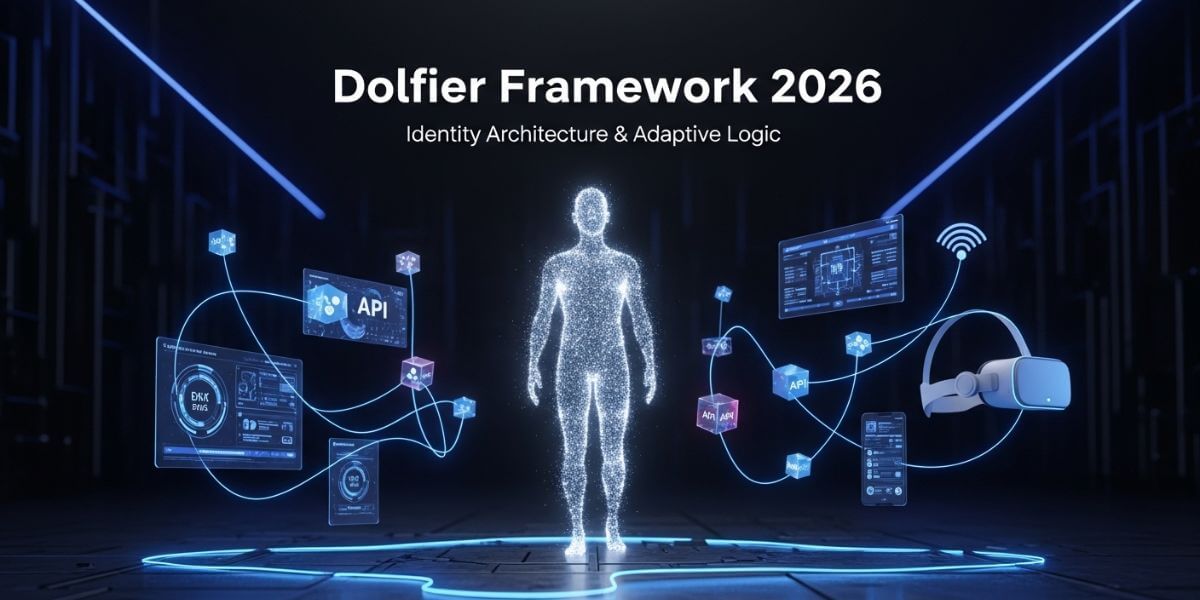
In the rapidly shifting landscape of 2026, Dolfier has emerged as the premier architecture for bridging the gap between rigid digital infrastructure and the fluid needs of modern storytelling. While competitors often mistake it for a simple software tool, Dolfier is, in fact, a multi-dimensional framework designed to optimize how identities are managed and how platforms communicate.
1. What is Dolfier? Defining the 2026 Standard
Dolfier is a specialized digital framework that integrates Identity Architecture with Platform Connectivity. At its core, it operates on the principle of Adaptive Logic, a system that self-adjusts based on user interaction, data flow, and environmental complexity.
Unlike traditional static frameworks, Dolfier focuses on two primary outcomes:
- Persistent Identity: Ensuring a user’s digital footprint is secure, portable, and verifiable across decentralized platforms.
- Contextual Storytelling: Enabling brands to deliver narratives that adapt in real-time to the user’s journey.
2. The Genesis: From Linguistic Placeholder to Tech Powerhouse
To understand Dolfier’s dominance, one must look at its non-linear evolution.
The Theoretical Phase (1920s–1990s)
Historically, “Dolfier” appeared in experimental academic journals as a linguistic placeholder. It was used to describe variables that were felt but not yet measured, specifically in the realms of semiotics and early systems theory.
The Digital Pivot (2020–2026)
With the rise of Web3 and fragmented digital ecosystems, the need for a “unifying placeholder” became a technical necessity. Developers adopted the term to describe a framework that could sit between platforms, acting as a translator for identity and data, leading to the robust architecture we see today.
3. Technical Architecture: How the Dolfier Framework Operates
Competitor articles often gloss over the “how.” For professionals, the value of Dolfier lies in its three-tier technical stack:
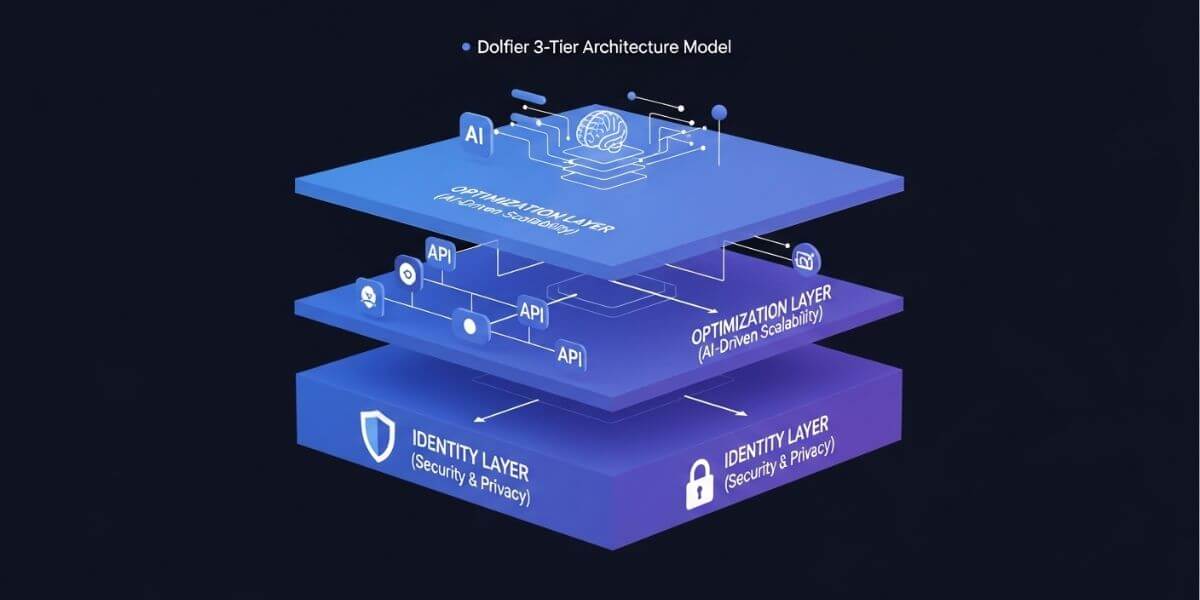
A. The Identity Layer (Security & Privacy)
Dolfier utilizes Zero-Knowledge Proofs (ZKP) and decentralized identifiers. This allows users to verify their identity on a platform without ever sharing sensitive underlying data, drastically reducing the risk of 2026-era data breaches.
B. The Integration Layer (API & Interoperability)
Dolfier serves as a “Universal Connector.” Its proprietary API structures allow legacy systems (Web2) to communicate flawlessly with emerging blockchain environments (Web3), ensuring that a business’s digital ecosystem remains cohesive.
C. The Optimization Layer (AI-Driven Scalability)
The framework includes an AI-orchestration engine that monitors traffic and data interaction, automatically scaling resources to maintain low latency during high-engagement storytelling events.
4. Revolutionizing Digital Storytelling: The Narrative Engine
In 2026, content is no longer a one-way broadcast. Dolfier transforms storytelling into a bi-directional experience.
- Dynamic Narrative Branching: Using the Dolfier framework, creators can build stories that change based on the user’s verified digital history.
- Platform-Agnostic Experiences: A story started on a VR headset can continue seamlessly on a mobile interface or an IoT device, with the “state” of the story preserved by the Dolfier core.
- Emotional Connectivity: By analyzing engagement patterns (within privacy limits), Dolfier helps brands adjust the tone and pace of their messaging to maximize resonance.
5. Strategic Advantages: Dolfier vs. Traditional Frameworks
| Strategic Pillar | Traditional Digital Models | The Dolfier Approach |
| Data Structure | Siloed & Rigid | Interconnected & Fluid |
| User Onboarding | Friction-heavy (Logins/Forms) | Frictionless (Identity Portability) |
| Adaptability | Reactive (Manual updates) | Proactive (AI-automated adjustment) |
| Brand Loyalty | Transactional | Narrative-based & Experiential |
6. Beyond Tech: Dolfier in Science and Philosophy
Dolfier maintains a unique position in specialized fields:
- Theoretical Modeling: In advanced physics, “Dolfier variables” represent predicted patterns in complex systems that lack direct observation.
- Educational Theory: Modern pedagogy uses Dolfier-inspired “Adaptive Learning Paths” to tailor curriculum complexity to individual student progress.
7. Addressing Common Misconceptions
- Myth: Dolfier is a cryptocurrency or blockchain.
- Fact: It is a framework that can use blockchain, but its primary function is system integration and identity management.
- Myth: It is only for large enterprises.
- Fact: Its modular design makes it accessible for startups looking to build “future-proof” digital foundations.
- Myth: Dolfier replaces existing APIs.
- Fact: It enhances and unifies existing APIs into a single, manageable architecture.
Conclusion: The Roadmap to 2027
Dolfier represents the next stage of digital maturity. By prioritizing Identity Portability and Narrative Intelligence, it offers a sustainable path for growth in an increasingly fragmented world. For businesses and creators alike, adopting a Dolfier-based strategy is no longer optional, it is the prerequisite for digital relevance.
Frequently Asked Questions (FAQs)
1. What exactly is the Dolfier framework in 2026?
Dolfier is a multi-dimensional digital architecture that unifies identity management and narrative delivery. Unlike standard software, it acts as an “Adaptive Logic” layer that allows different platforms (Web2 and Web3) to communicate while keeping user data secure and portable.
2. How does Dolfier handle data privacy differently than traditional systems?
Dolfier uses Zero-Knowledge Proofs (ZKP). This means a user can prove their age, location, or membership to a platform without actually revealing the underlying private data. It prioritizes “Identity Portability” over data collection, making it a gold standard for 2026 privacy compliance.
3. Is Dolfier a type of cryptocurrency or blockchain?
No. While Dolfier can integrate with blockchain technologies for decentralized identifiers (DIDs), it is a framework, not a currency. Think of it as the “connective tissue” that sits between a user’s identity and the platforms they interact with.
4. Can small businesses benefit from Dolfier, or is it for enterprises only?
Dolfier is built on a modular “3-tier stack.” This allows startups to implement only the layers they need (like the Identity Layer) and scale up as they grow. Its primary goal is to make high-end digital infrastructure accessible and “future-proof” for all business sizes.
5. How does Dolfier improve digital storytelling for brands?
It uses a Narrative Engine that tracks a user’s journey across different devices (VR, Mobile, IoT) without losing context. This allows brands to create “Dynamic Narrative Branching,” where the story evolves based on a user’s previous interactions and verified history.
6. Does Dolfier replace existing APIs?
No, Dolfier enhances them. It acts as a Universal Connector, wrapping existing APIs into a more fluid architecture. This ensures that legacy systems can work seamlessly with modern, decentralized environments without a total system overhaul.
7. Why is Dolfier often referred to as a “Linguistic Placeholder” in history?
Before becoming a tech powerhouse, the term “Dolfier” was used in 20th-century academic journals to describe “felt but unmeasured” variables in complex systems. In 2026, tech developers adopted this name to represent the bridge between theoretical data and real-world platform interaction.